A lane that feels ancient underfoot is often younger than it looks. The rounded stones, the granite kerb, the narrow strip of flagstones beside it: much of that arrangement was decided by Victorian engineers and local boards of health between roughly 1840 and 1900. Before then, a street was mostly a surface rather than a system. Afterwards it was drainage, footway, carriageway and kerb, in roughly that order of priority.
Knowing what changed makes a walk down a back lane far more interesting. You start to notice which bits are worn, which are replacements, and why the street is shaped the way it is.
Early cobbled streets were simple things. Water-worn stones from a riverbed or beach were tipped onto whatever was underneath — often compacted earth, rubble, or an older road surface — and roughly levelled. There was usually no foundation to speak of, no separate footway, and no proper drainage.
Rain ran wherever the ground took it. Refuse and household water went into an open channel, sometimes down the middle of the street, sometimes along one side. Streets were often crowned in the centre simply because that was the cheapest way to shed water. Footways, where they existed at all, were a Georgian refinement found in newer squares and smarter towns.
Round cobbles had one real virtue: when dry, they gripped. When wet, carts slid, stones rolled, and the surface held water in every gap.
The sanitary reformers changed the order of things. Edwin Chadwick's argument in the 1840s was blunt: filth and water should be removed together, underground, in pipes. The Public Health Act of 1848 allowed towns to set up local boards of health, and the consolidating Act of 1875 gave them clearer powers. In London, Joseph Bazalgette's main drainage scheme for the Metropolitan Board of Works pushed the idea further still.
The consequence for streets was enormous. To lay a sewer you must open the road from end to end. Branch drains run to individual properties, which meant doorways had to be broken open and cellars connected. Then the surface water needs collecting, so the carriageway gets a camber, or crown, so rain runs off to a channel on each side. That channel is formed by the kerb. At the low points, iron gullies with heavy grates drop the water into the sewer below.
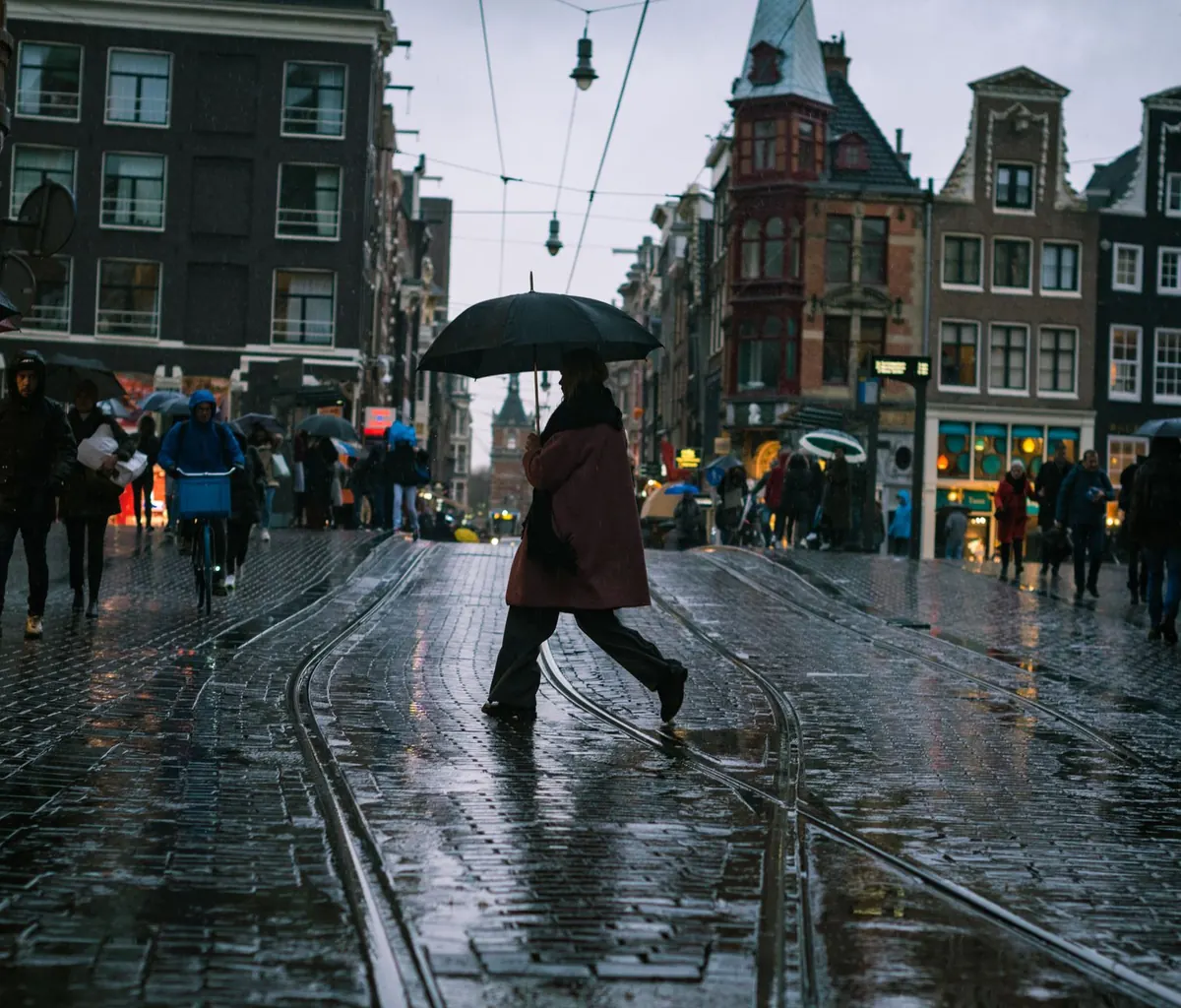
Look closely at an old lane and you can often still see the sequence: a slight hump in the middle, a shallow gutter at each edge, a grate or two, and ironwork bearing a foundry name. There are smaller survivals too — coal chutes, cellar flaps, and the odd iron hopper on a wall.
It did not happen everywhere at once. Private streets, gated lanes and poorer courts often lagged, and there were long arguments about who paid for connections. That uneven progress is why one town can have three different kinds of paving in half a mile.
The kerb is the giveaway. A dressed granite kerb with a flagstone behind it, set a few inches above the carriageway, tells you a street was properly rebuilt rather than merely resurfaced. The kerb does three jobs: it separates people from traffic, it holds the edge of the road surface in place, and it forms the channel that carries rainwater to the gullies.
Footways were laid in large sawn flags — York stone was the prized material in cities, with smaller or cheaper flags elsewhere, and brick or concrete in later work. Kerb lines curve back at junctions to let carts and carriages turn, a splay that grew wider as vehicles got bigger. Bollards appear at corners to stop wheels mounting the footway.
Creating a footway often meant taking space from frontages. Garden walls were set back, replaced, or removed altogether, and the resulting disputes filled a good many local newspaper columns.
Here is the distinction worth carrying with you. A cobble is a rounded, water-worn stone, irregular in size and shape. A sett is a quarried stone dressed to a roughly rectangular block with a flat top. Granite was the favourite, though limestone and whinstone turn up too. Locally, people often call both "cobbles", which is why the two get muddled.
Victorian improvement generally meant lifting the old cobbles and laying setts instead. Flat tops spread the weight of a wheel. Squared blocks lock together, so they cannot roll. The surface drains better, cleans more easily, and makes less noise under iron tyres — though plenty of noise remained.
Setts were typically around 75–100mm across, bedded on a layer of sand or small stones over a foundation, with joints filled by sweeping in sand or fine gravel. Bigger setts were used near the kerb, where loads were heaviest; smaller ones toward the crown. Some streets used very small setts, laid in rows across the road, or in overlapping arcs springing from the kerb — a pattern that holds its shape well on a slope.
Asphalt, concrete and later tarmac were cheaper, quieter and quicker to lay. From the 1920s onwards, many sett streets were simply covered over, which is why utility trenches in old towns sometimes break through to a perfectly sound stone road. Steep hills, docks, goods yards, market squares and lanes too narrow for machinery often kept their setts because nothing else worked as well.
Later still, some councils lifted setts and sold them on. Others relaid them in pedestrianised centres. A sett that looks like heritage is occasionally a 1990s reproduction, laid to a slightly too-neat pattern.
What to look for: the dressing on the kerb stones, the channel beside them, iron gullies and their maker's marks, worn flagstone thresholds, cellar flaps, and setts laid in arcs. Wear tells a story — setts standing proud at the edges and hollowed in the wheel tracks show where traffic ran for decades.
Where the kerb line steps in or out, you are often looking at an older, narrower street that was widened. Where flagstones give way to small bricks, you have probably crossed into later or cheaper work.
A few practical notes. Wet granite is genuinely slippery, especially on slopes, in shade, and where algae or fallen leaves have gathered; shoes with decent tread make a real difference, and flagstones are usually the safer footing. Loose setts, missing covers and uneven joints are common, so watch your step rather than the camera. For photographs, overcast light or early morning shows the texture better than harsh midday sun.
And keep one thing in mind as you wander: old does not mean medieval. Many lanes that feel ancient are Victorian rebuilds of something much earlier, and knowing both dates is half the pleasure.
Photo: eduardovieiraphoto / Pixabay