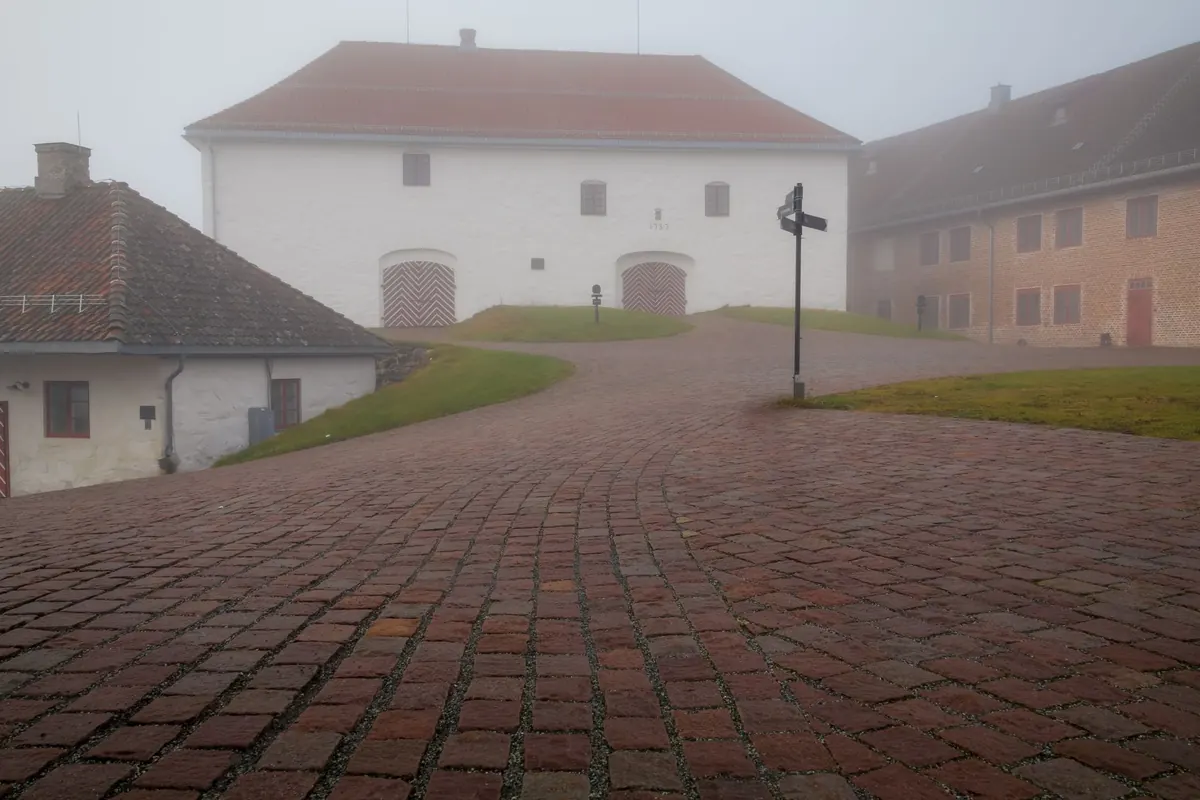
Autumn suits a cobbled street better than any other season. The setts darken with damp, leaves gather along the gutters, and a low mist blurs the rooflines until a lane you have walked a dozen times looks like something out of a Victorian photograph. Crowds thin out after the summer, the light stays soft well into the morning, and if you start early there is a fair chance you will have the cobbles to yourself.
These five streets and villages reward that early start. Each one has genuine cobbles underfoot, a route worth walking rather than just photographing, and enough of a slope or a waterside position to hold the mist a while.
Mist is not luck. It forms on still, clear nights when the ground is damp and the air cools quickly, which is why the best autumn mornings often follow an ordinary wet day. Wind kills it, strong sun burns it off, and low ground — valleys, estuaries, harbour bottoms — holds it longest.
So towns that sit low or slope down to water are better bets than hilltop villages, where the mist is either below you or gone by eight. Check sunrise time and a local forecast the night before, then aim to be walking within an hour of first light. That is when the mist is thickest, the streets quietest and the light kindest to stone.
Clovelly's main street is one of the steepest cobbled lanes in the country, falling in steps and ramps between whitewashed cottages down to a stone harbour. No cars are allowed, which means the only sounds on an October morning are the sea, a few gulls and your own breathing on the climb back up.
The village is privately owned and there is an entrance charge, so it is worth treating the visit as a proper day out rather than a quick detour. Walk down slowly; the cobbles here are rounded and worn smooth in the middle, and the descent is far harder on the knees than the ascent. At the bottom, the harbour wall is the place to watch mist sitting on the Bristol Channel. On the way back, the Hobby Drive, a wooded carriage road above the village, turns gold and bronze through late October and is much gentler underfoot.
Mermaid Street is the postcard: a steep cobbled hill of timber-framed houses, with the Mermaid Inn halfway up and a cobbled gutter running down the middle. Look beyond the famous view, though, and Rye gives you a proper morning's walk. Climb Mermaid Street to West Street, carry on to St Mary's Church, and if the tower is open, go up. From the top the mist is usually lying in flat layers over Romney Marsh, with the town sitting above it like an island.
Come down through the cobbled lanes behind the church towards Ypres Tower and the town walls, then loop back along Watchbell Street. Early on a weekday you may pass two people and a dog. By eleven, the coach parties have arrived and the mist has gone — plan accordingly.
Haworth's Main Street climbs at a serious angle, cobbled from bottom to top, past the Black Bull and up towards the Brontë Parsonage Museum. On a damp autumn morning the setts shine and the Worth Valley below sits under a band of mist that lifts slowly through the morning.
Walk the street first, while it is quiet, then take the lane past the church and out towards Penistone Hill for the view back over the rooftops. The moor paths beyond are muddy rather than cobbled, so save them for a dry day, or keep to the lanes. Autumn colours here are bracken rather than woodland — rusty, wide and bleak in the best sense. If you hear a train, it is the heritage line in the valley; steam against mist is worth waiting five minutes for.
Edinburgh has more cobbles than most English cities put together, and the Old Town is where to find them at their most dramatic. Start at the Grassmarket, climb Victoria Street — the curved, two-tiered lane of coloured shopfronts — and follow the Royal Mile down towards Holyrood.
The mist behaves differently here. It settles in the hollow below the Castle and along Princes Street Gardens, so the Old Town often sits above it in clear air while the New Town disappears. Duck into the closes and wynds that drop off the Mile; Advocate's Close and Fleshmarket Close are short, steep and atmospheric, and almost empty before nine. Watch for delivery vans and taxis, which use these streets as if they were ordinary roads.
Culross is the quietest of the five and possibly the most rewarding on a misty morning. The little burgh on the Forth is looked after by the National Trust for Scotland, and its streets — the Back Causeway, Tanhouse Brae and the lanes around the ochre-painted palace — are cobbled and steep, climbing from the shore to the ruined abbey above.
Mist off the water is almost a fixture from October onwards. Arrive early, park near the bottom, and walk up through the town rather than down; the views back over the Forth improve with every step. Weekday mornings are blissfully quiet, and the palace gardens and painted wooden ceilings are worth an hour once they open.
A few practical points make the difference between a lovely walk and a wet, bruised one. Wet cobbles, steep steps and fallen leaves are a serious combination: shorten your stride, keep both hands free and use the handrails where they exist. Stepped descents in villages like Clovelly and Culross are hard on knees and ankles; if you have joint trouble, a heart condition or are unsure how you will manage a steep, slippery descent, speak to a GP or physiotherapist before you go.
Daylight fades early from late October, and mobile signal can be patchy in valleys and on the coast, so tell someone your rough route and carry a charged phone. In small villages, park considerately and keep noise down before nine — people live behind those windows.
Warm boots, a flask, a free morning and no particular hurry: that is the whole recipe. Choose one street, get there before the day properly starts, and autumn will do the rest.
Photo: Surdu Horia / Pexels