The photographs never show the ankles. Cobbled streets in towns such as York, Stamford, Ludlow and Shrewsbury are among the most photographed surfaces in Britain, and they are also uneven, cambered, often wet, and occasionally slick with a thin film of something you would rather not identify. Most of the mistakes visitors make in these places are not dramatic. They are small, ordinary misjudgements — the wrong shoes, the wrong hour, a gate opened when it should have stayed shut — and they have a habit of turning a promising day out into a short one.
There is a difference between cobbles and setts. True cobbles are rounded, water-worn stones; setts are the flatter, squarer blocks that make up most surviving historic streets. Both are laid by hand, which means no two are level and the gaps between them collect rainwater, grit and, in winter, ice. Worn smooth by two centuries of feet, they behave rather like wet glass when it rains.
What your shoes need to do is grip, cushion and stay on. Anything thin-soled transmits every stone straight up through your heels, and by mid-afternoon that dull ache in your shins is not a mystery.
If you have balance problems, arthritis or a recent injury, think carefully about how long you plan to be on your feet, and consider speaking to your GP or a physiotherapist before committing to a full day of it. There is no shame in a shorter route, a bench stop or a stick.
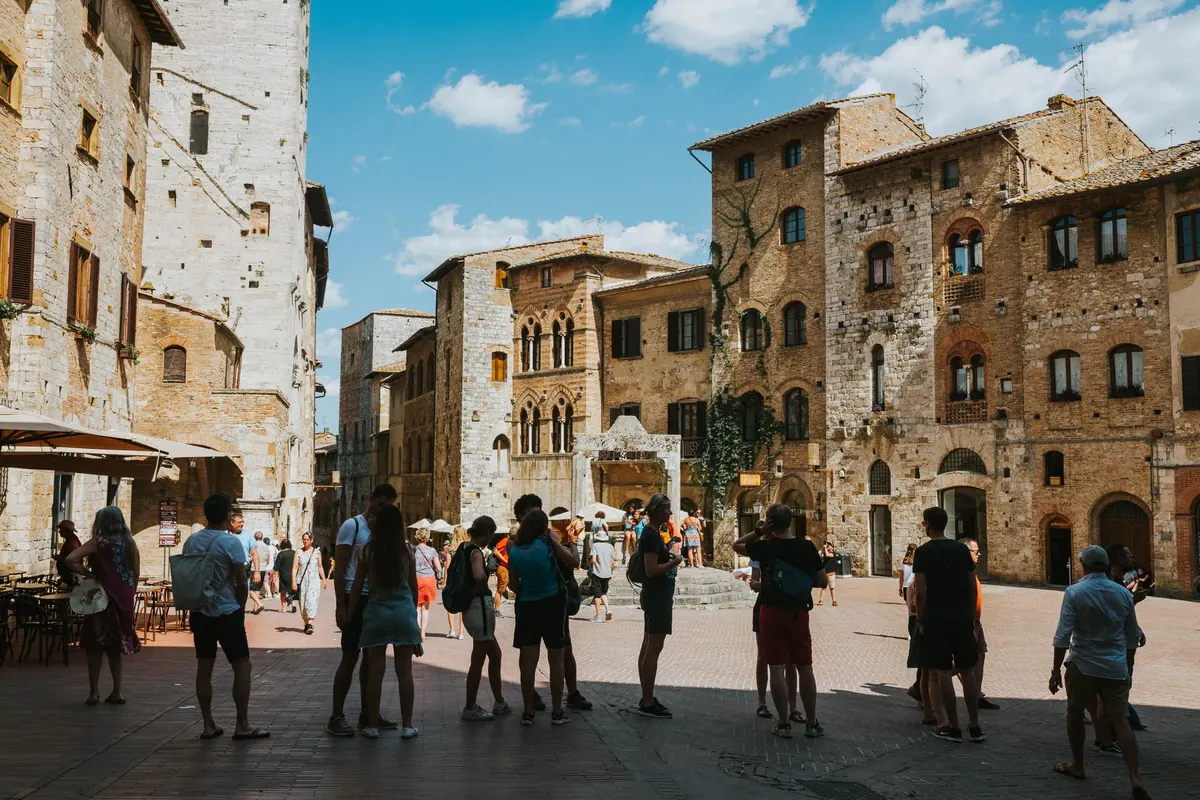
Historic towns have a rhythm, and it is remarkably predictable. Coach parties and day-trippers tend to arrive from mid-morning and leave by late afternoon, which puts the squeeze roughly between 11am and 4pm. Market days add a crowd of their own. Add a bank holiday or a school break and the narrowest lanes become a slow-moving queue.
Go early. Before 10am you will often have the best streets almost to yourself, with the light coming in low across the rooftops and shopkeepers still sweeping their doorsteps. Alternatively, come back after about half past four, when the coaches have gone and the town returns to the people who live in it. Lunchtime is the worst of both worlds: the pavements are full and every café has a queue.
Weather matters as much as the clock. A heavy downpour washes the stones reasonably clean, but a light drizzle leaves a greasy film that is far more treacherous. Frost and ice are worse still, and in winter many small attractions and tea rooms keep shorter hours than you might expect.
Much of what looks like public street in a historic town is not. Alleys and courtyards may be privately owned, with a right of way for pedestrians only. Some lanes are closed to vehicles except for deliveries in a short early-morning window. Others have been closed altogether while conservation work is carried out on the setts beneath.
The signs are usually there, and they usually mean something. Common errors include:
Vehicle restrictions, parking rules and closure notices are set locally, so check with the town council or a tourist information point before you travel rather than relying on an old map or a passing comment. On accessibility, ask ahead too: many historic centres have few dropped kerbs, and step-free routes often exist but are rarely signposted.
People live behind those Georgian doors. They also take deliveries, wheel bins along the setts, push prams and navigate the same narrow lanes you are photographing. Standing in the middle of a passage to frame a shot, gathering a group across the full width of a lane, or letting children run ahead out of sight causes real friction — and it is the quickest way to make locals resent visitors.
Keep to one side. Step into a recess to take a picture, but not into a private doorway. Keep dogs on a short lead rather than a long extendable one. Keep the noise down in residential lanes in the evening, when sound bounces off stone in a way that carries much further than you would think.
Cobbles exist precisely because these towns were built long before cars, and many of them sit on a slope. A route that looks like a ten-minute stroll on a map can take twice that on worn stone, especially uphill. Streets are also cambered, so you spend the whole walk tilted to one side, which tires hips and ankles quickly.
Plan a loop that climbs early and descends later, while your legs are fresh. Build in more time than you think you need. Keep your hands free — a rucksack beats a handbag or carrier bag on a steep, uneven lane — and take the steps between levels slowly, using the handrail where there is one.
The loveliest towns are often the least convenient. Public toilets may be few, tucked away and closed by early evening. Parking in the centre is limited, so park and ride, or a car park on the edge with a walk in, is usually the better plan. Buses between small towns can be infrequent, particularly on Sundays.
Cafés and pubs fill fast at lunch, so book, or eat at half eleven or half two. Carry a card and a little cash as a backup, a refillable bottle, and a waterproof layer that packs small. Wear your bag across your body rather than dangling it, and keep an eye on your footing rather than your phone.
Before you set off, run through this in your head: sensible shoes with grip, a spare pair of socks, a waterproof, a plan for parking, and a rough idea of where the toilets are. Aim to arrive before ten or after half four. Check for any closures or access restrictions. Walk on the side of the lane, not the middle. And if the weather turns, treat the stones with the respect you would give a wet bridge.
Cobbles are not an obstacle to be endured on the way to the nice bits. They are the nice bit — the reason the town looks the way it does. Give them a bit of thought, and you will notice far more of the place than the inside of a pharmacy queue.