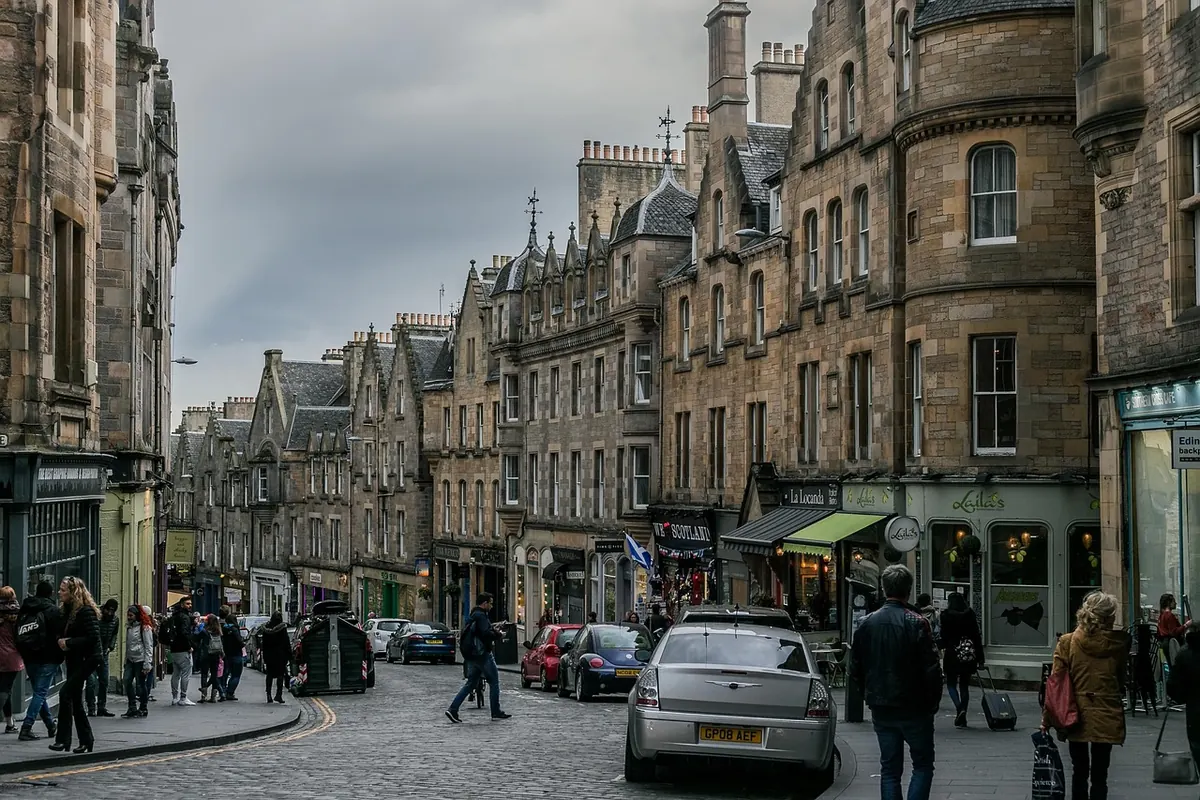
England’s historic market squares are outdoor archives. Their cobbles, setts and flagstones have been worn smooth by centuries of carts, cattle, traders, shoppers and storytellers. Long before supermarkets and online deliveries, these open spaces were the economic and social heart of a town. A charter to hold a market could make a settlement’s fortune, and the square around which that market grew became a stage for commerce, gossip, punishment, celebration and protest. Today, many towns have lost their old surfaces to asphalt or modern paving. Others have carefully preserved or restored their cobbled market squares, keeping alive a texture of history that is best experienced on foot.
It is worth saying that “original” can mean different things. Some squares retain medieval layouts and ancient stones; others have been re-laid with traditional granite or limestone setts after years of wear, damage or road traffic. The best examples preserve not only the materials but also the pattern of the past: wide open market areas, narrow entries, coaching inns, market crosses, tollbooths and town halls. In these places, the cobbles are not just decoration. They are a reminder that the square was a working room, not a museum exhibit.
Cobbled squares tell the story of how England traded. A market cross often marked the official site of a charter market, while a buttercross or market house sheltered sellers of dairy goods, eggs, corn or cloth. Inns around the edge offered lodging to drovers, merchants and travellers. Some squares had shambles for butchers, corn exchanges for grain, and stocks or pillories for public punishment. The surface itself was practical: rounded cobbles or squared setts allowed water to drain, gave horses grip, and could be repaired one stone at a time.
These spaces also reveal changes in fashion and fortune. A medieval square might be dominated by a church and a market cross. A Georgian square might acquire elegant assembly rooms, a covered market, or a handsome town hall. A Victorian square might gain a clock tower, a fountain or a statue. When you stand in the middle of a surviving cobbled market square, you are standing at the intersection of all those layers.
Across England, certain towns are especially celebrated for their cobbled market squares. In Yorkshire and the North, Beverley has one of the largest and finest, with Saturday Market and Wednesday Market both retaining a broad cobbled expanse, a market cross and handsome Georgian buildings. Thirsk has a cobbled Market Place with a clock tower and a James Herriot connection. Richmond in North Yorkshire offers cobbles, a castle and the Georgian Theatre Royal just steps away. Ripon is famous for its hornblower, who still sounds the watch at the market cross. Skipton, Barnard Castle, Alnwick, Hexham, Durham and Morpeth all retain historic market areas with cobbled or setted surfaces and a strong sense of the past.
In the Midlands and East, Ludlow is a standout: Castle Square and Broad Gate are cobbled, medieval and beautifully preserved, with the castle, St Laurence’s Church and the Buttercross nearby. Shrewsbury has The Square, where Tudor and Georgian buildings lean over cobbles and old market traditions. Much Wenlock, Bridgnorth, Newark-on-Trent, Stamford, Oakham, Uppingham and Louth all reward a slow wander. Saffron Walden has a large cobbled Market Square with a market cross, while Ely, Hitchin, St Albans, Abingdon, Wallingford, Woodstock, Chipping Norton, Burford, Witney, Evesham, Pershore, Warwick, Lichfield, Stafford, Uttoxeter, Leek, Ashbourne and Chesterfield all preserve historic market spaces with cobbles or stone setts in whole or in part.
In the South and West, Wells is perhaps the most atmospheric of all: its Market Place is cobbled, overlooked by the cathedral and Bishop’s Palace, and still hosts a lively market. Frome, Cirencester, Stow-on-the-Wold, Chipping Campden, Tetbury, Devizes, Marlborough, Salisbury, Dorchester, Sherborne, Shaftesbury, Bridport, Totnes, Tavistock, Glastonbury, Axbridge, Dunster, Bradford-on-Avon, Corsham, Malmesbury, Faversham, Sandwich, Rye, Lewes, Chichester, Petworth, Midhurst, Farnham, Guildford and Godalming all have streets or squares where cobbles and old market buildings survive. Some are tiny; some are grand. Together they form a map of England’s trading past.
Beverley’s Saturday Market is a vast cobbled space with a market cross, Georgian shopfronts and a sense of occasion that survives from its days as a major wool town. Nearby, Wednesday Market is smaller but equally historic. The town also has Beverley Minster, one of England’s finest Gothic churches, and the Westwood pastures. Arrive on market day to hear stallholders calling, but return early in the morning to see the cobbles empty and the light moving across the stone.
Ludlow’s Castle Square and Broad Gate are a near-perfect ensemble of cobbles, timber-framed buildings, Georgian brick and medieval gateways. The castle broods at one end; St Laurence’s Church rises at the other. The Buttercross, now often used for markets and events, has stood at the centre of town life for centuries. Ludlow is also famous for its food festival, which fills the square with producers and visitors while keeping the historic setting intact.
Wells Market Place is cobbled, compact and beautifully framed by the cathedral, the Bishop’s Palace and the old Swan Hotel. The market has been held here since the 12th century, and the square still feels like a place where people meet as much as shop. Walk through the Penniless Porch, explore the cathedral green, and then return to the market for local cheese, bread, flowers and conversation.
Of course, this route only scratches the surface. A weekend in Norfolk could take in Wells-next-the-Sea, Holt, Swaffham and King’s Lynn. A Cotswold tour could link Stow-on-the-Wold, Chipping Campden, Tetbury and Cirencester. A West Country trip could combine Wells, Frome, Axbridge and Dunster. The pleasure is in slowing down, looking beneath your feet, and noticing how much history a single stone can hold.
These squares face real pressures. Heavy vehicles can crack setts, modern drainage can alter the way water moves, and accessibility standards sometimes conflict with uneven historic surfaces. Repair is skilled work: stones must be lifted, cleaned, re-bedded and re-laid in traditional patterns. Local councils,